

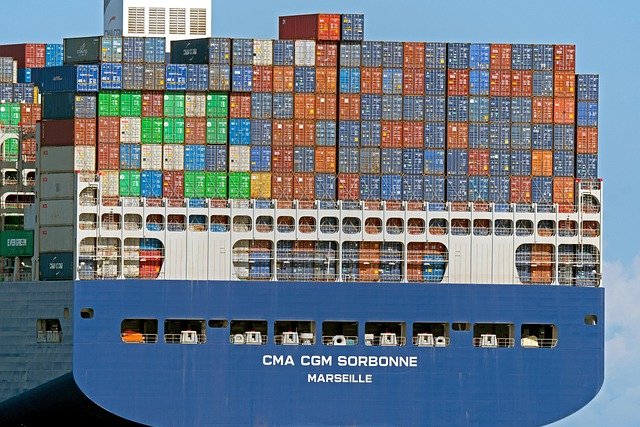
Weaker global trade in goods is a key factor behind the Philippines’ projected balance of payments (BOP) deficit through 2026, according to the Bangko Sentral ng Pilipinas (BSP).
Latest central bank data show that as of end-September, the country’s overall BOP position—reflecting total transactions with the rest of the world—posted a deficit of $5.3 billion, equivalent to about -1.5 percent of domestic output. While this figure is lower than the Monetary Board’s earlier projection of a $6.9 billion deficit, it still underscores persistent external sector pressures.
For the full year, the BSP expects the deficit to widen to $6.2 billion, before easing slightly to around $5.9 billion by 2026. This marks a clear reversal from previous years, a shift the central bank attributes to “continued current account shortfall arising from a sustained trade-in-goods gap and weaker services receipts.”
The BSP further noted that “foreign direct investments and external loans have also moderated amid lingering global policy uncertainty,” compounding the external imbalance.
Looking ahead, the central bank warned that “goods trade is expected to remain soft, shaped by weaker global demand, easing commodity prices, and slower domestic growth momentum.” While it acknowledged that “frontloading in anticipation of the US tariffs in the first half of the year has helped provide a temporary boost to merchandise exports in 2025,” the BSP emphasized that deeper challenges persist. In particular, “structural constraints—including logistical bottlenecks, skills mismatches, and high input costs — also continue to weigh on export competitiveness.”
Services exports are likewise expected to lose momentum, as the BSP said growth would slow due to rising costs faced by the business process outsourcing (BPO) and tourism sectors.
Despite these headwinds, the central bank highlighted a key source of stability, noting that “overseas Filipino (OF) remittances are expected to remain resilient, supported by strong global labor demand and the sustained use of formal transfer channels, with the impending US tax on remittances expected to pose minimal impact.”
Foreign direct investments, however, are projected to grow at a slower pace, “reflecting cautious market sentiment and heightened global financial volatility.” Over the medium term, the BSP expressed optimism that investment inflows could be strengthened by recently passed reforms, including the CREATE MORE Act, the Capital Markets Efficiency Promotion Act (CMEPA), the Investors’ Lease Act, the Enhanced Fiscal Regime for Large-Scale Metallic Mining Act, and digital connectivity initiatives such as the Konektadong Pinoy Act.
“This underscores the importance for the national government (NG) to implement these laws in a timely and effective manner,” the BSP stressed.
Even amid a sustained BOP deficit, the central bank reassured that the country’s gross international reserves are expected to “remain adequate, providing a strong buffer against external liquidity risks.” Supporting this view, early warning system assessments show that the Philippines “remains resilient to external shocks as of Q4 2025 (fourth quarter 2025).”
“Manageable external financing needs and ample level of reserves continue to support external sector resilience,” the BSP said, adding that it “will continue to engage proactively with external stakeholders and promote macroeconomic stability, closely monitoring emerging risks that impact the external sector.”
Private sector analysts echoed this cautiously optimistic outlook. Rizal Commercial Banking Corporation chief economist Michael Ricafort said the BOP deficit “could still support relatively stable peso exchange rate.” However, he emphasized the need for stronger governance reforms, calling attention to an “important market lead.”
“If anti-corruption measures/reform and policy priority of further improvement in governance standards are taken seriously, as these remain the missing link to boost confidence by investors on the economy and financial markets, especially FDIs and foreign portfolio investments,” he said.
PIXABAY PHOTO