

The UN Trade and Development Organization (UNCTAD) projected Wednesday that global economic growth will slow to 2.6 percent this year amid rising financial volatility and geopolitical tensions, stressing that the global financial system must adapt to better support the real economy.
In its Trade and Development Report 2025, UNCTAD noted that global trade still appears resilient, with goods continuing to move and supply chains adjusting. Trade grew about 4 percent in early 2025 despite tariff hikes and political frictions. Services expanded even faster, driven by the digital and AI-driven economy, while trade among developing countries outpaced the global average.
However, UNCTAD warned that policy instability has become a persistent threat to trade, investment, and development. Financial shocks are spilling into the real economy more quickly, and structural gaps in the global economy are widening. With more than 90% of global trade dependent on financing, financial turbulence and geopolitical uncertainty are increasing vulnerabilities.
These pressures are weighing on economic activity, prompting UNCTAD to forecast a slowdown in global growth from 2.9 percent in 2024 to 2.6 percent this year.
As shifting geopolitics reshape globalization, UNCTAD said the financial system must evolve to better serve economic needs. “Trade is not just the concatenation of suppliers. It is also the concatenation of credit lines, payment systems, currency markets, and capital flows,” UNCTAD Secretary-General Rebeca Grynspan said.
Developing economies—despite facing the greatest financial and climate risks—are expected to grow 4.3% this year, faster than developed countries. Wealthier economies confront higher borrowing costs, greater vulnerability to sudden capital flow changes, and increasing climate-related financial risks, all of which restrict their capacity to invest and maintain growth.
The Global South, which includes developing nations in Africa, Asia, and South America, now accounts for more than 40 percent of global production, nearly half of goods trade, and over half of global investment inflows. Yet their presence in financial markets remains limited: excluding China, developing countries make up only 12 percent of global stock market capitalization and 6 percent of global bond issuance.
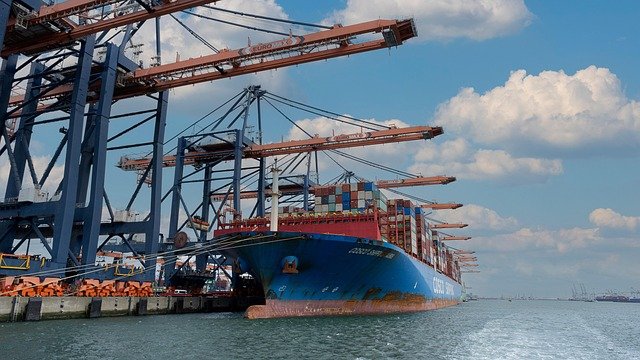
PIXABAY PHOTO