

The Philippines’ electric vehicle (EV) industry is no longer a fringe conversation — it is on the brink of serious expansion as consumer demand accelerates and awareness of EV benefits intensifies, an industry official declared Monday.
“Definitely it will grow. So, if we talk about EV, new electric vehicle segment, I do believe it will be growing very fast,” Denza Country Head Adam Hu said during a briefing.
“And for the big EV segment, though in 2025 it’s just a minor part of the entire EV segment, but I do believe in 2026 it will take more percentage of the PEV (plug-in EV),” he added.
Data from the Chamber of Automotive Manufacturers of the Philippines Inc. and Truck Manufacturers Association underscore the momentum: electrified vehicles (xEV) already account for 7.01 percent — or 32,489 units — of total vehicle sales among their members. That share is small, but it’s growing — and fast.
Of the total, hybrid electric vehicles (HEVs) dominate with 25,737 units, followed by battery electric vehicles (BEVs) at 4,613 units, and plug-in hybrid electric vehicles (PHEVs) at 2,139 units. The direction is clear: electrification is gaining ground, and traditional players can no longer ignore it.
The government has thrown its weight behind the EV sector as part of its aggressive pivot toward clean energy and environmental protection.
Through the Electric Vehicle Industry Development Act (EVIDA), EVs are exempt from the Unified Vehicular Volume Reduction Program for eight years from the law’s implementation. The measure also delivers tax incentives and a temporary zero-tariff policy for manufacturers — a clear signal that the Philippines is serious about attracting investors and accelerating adoption.
The Department of Energy (DOE) has set an ambitious target: EVs should comprise 50 percent of vehicles on the road by 2040 — roughly 2.5 million units. That goal leaves no room for half measures.
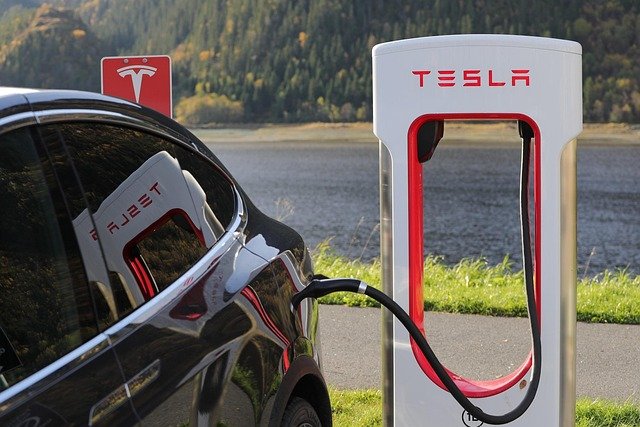
To push the transition forward, the DOE issued a circular urging distribution utilities to integrate EV charging stations into their development plans. It is also pressing more establishments to install charging stations in their facilities.
The government is targeting the rollout of 7,300 EV charging stations nationwide by 2028 — a massive jump from the roughly 1,100 stations today, most of which are concentrated in urban areas. The expansion is not optional; it is critical.
Hu said Denza, the premium EV brand of BYD Group, is aggressively exploring partnerships with technology providers to scale up charging infrastructure and drive more customers to make the shift.
He acknowledged that while EV adoption in the Philippines mirrors growth in neighboring countries, the country presents a structural challenge that cannot be ignored.
“A unique part about the Philippines is due to geography, you have more than 7,000 islands. So, it’s quite big challenge for us to establish the charging network in the Philippines,” he said.
Still, the company is moving to confront that reality head-on by coordinating with mall owners to accelerate charging station installations and pursuing local technology partnerships.
“We can openly discuss with the local companies who are interested in building the charging infrastructure. We are willing to provide the charging products or the technologies and the local companies, they can contribute their own charging technology,” he said.