

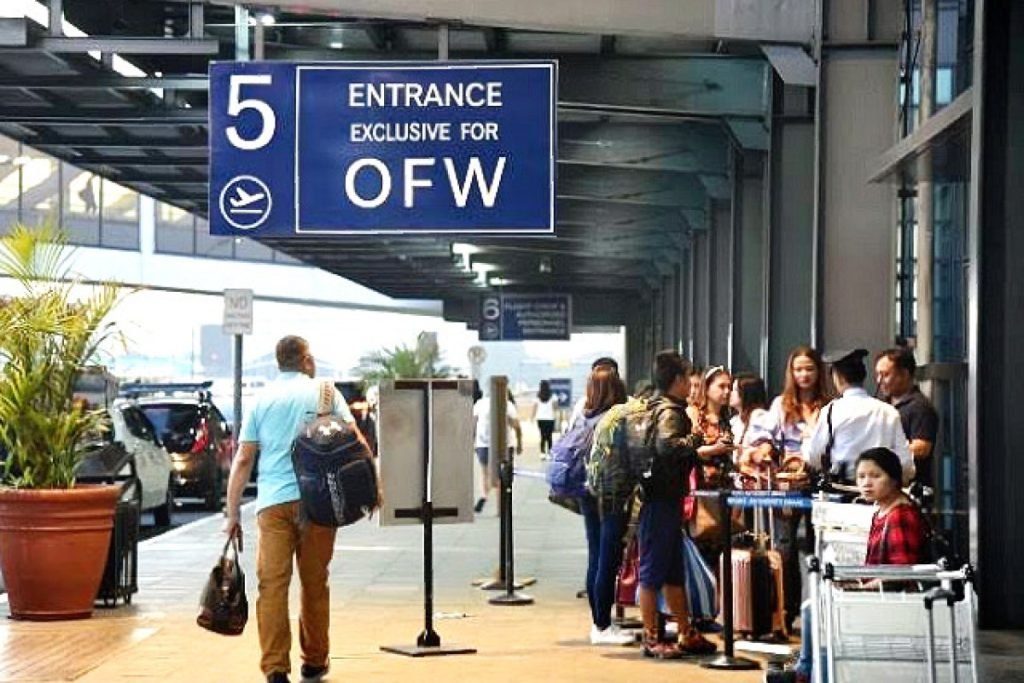
Money sent home by overseas Filipino workers (OFWs) rose by 3 percent year-on-year to $3.2 billion in October 2025, from $3.1 billion a year earlier.
Preliminary data released by the Bangko Sentral ng Pilipinas (BSP) on Monday showed that total cash remittances in the first 10 months of the year reached $29.2 billion, up 3.2 percent from $28.3 billion in the same period last year.
By country of origin, the bulk of cash inflows came from the United States, accounting for 40.3 percent, followed by Singapore at 7.2 percent; Saudi Arabia at 6.4 percent; Japan at 4.9 percent; the United Kingdom at 4.7 percent; and the United Arab Emirates at 4.5 percent.
Including in-kind remittances, total remittances reached $3.52 billion in October 2025, bringing the cumulative total to $32.5 billion as of end-October.
Rizal Commercial Banking Corporation (RCBC) Chief Economist Michael Ricafort said sustained growth in remittances from overseas Filipinos remains a bright spot for the domestic economy, as it supports household spending, which accounts for around 73 percent of the country’s gross domestic product (GDP).
He noted that the recent weakness of the peso has increased the peso value of remittances, making it more attractive for overseas Filipinos to send money home, as it boosts the purchasing power of their families.
“For the coming months, possible lower US Federal Reserve rates or rate cuts could help support US and global economic activity, but may lead to a weaker US dollar against major global currencies, though not across all currencies,” Ricafort said.
However, he cautioned that protectionist policies under the Trump administration could dampen US and global growth, potentially affecting global trade, investment, and employment.
He also noted that the proposed 1 percent tax on OFW remittances from the United States “could be a drag on remittance growth and on the overall local economy.”
PIA PHOTO