

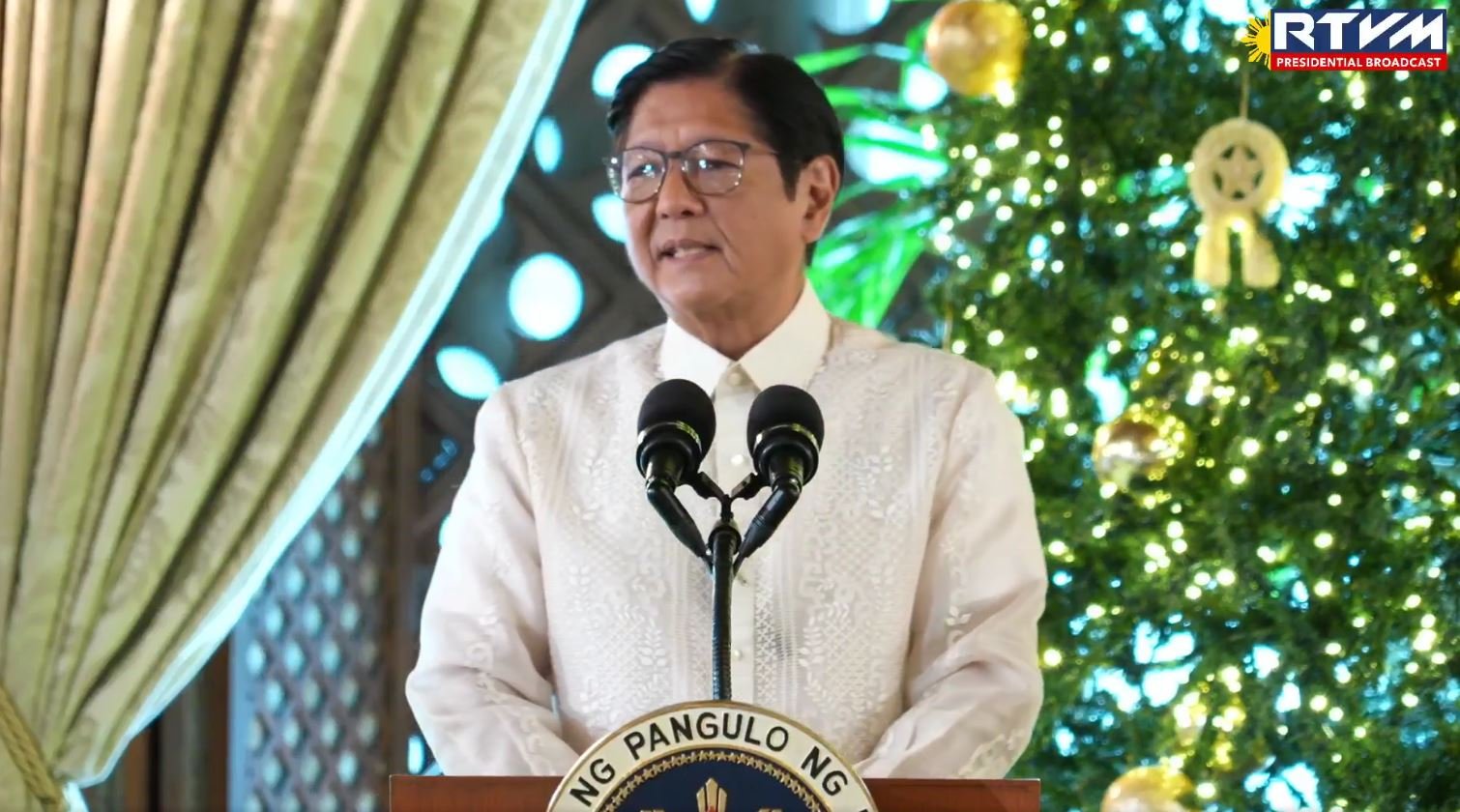
President Ferdinand R. Marcos Jr. on Monday signed into law the P6.793-trillion national budget for 2026, vetoing P92.5 billion worth of items under the Unprogrammed Appropriations to strengthen safeguards on public spending and reinforce fiscal discipline.
The signing of Republic Act No. 12314, or the General Appropriations Act (GAA) of 2026, was held at Malacañan Palace.
In his speech, Marcos said the challenges faced in 2025—ranging from climate-related disruptions and economic uncertainty to the exposure of corruption—underscored the urgency of long-overdue reforms.
“The year 2025 tested our nation on many fronts… These challenges are painful, but they also made one thing clear: real change could no longer wait,” the President said.
He emphasized that the 2026 national budget marks a crucial step in strengthening governance reforms and restoring public trust.
“As we enter this year, let us take this opportunity to start moving forward with difficult but needed reforms in governance, to rebuild our trust… and deliver an honest and effective government to the Filipinos,” Marcos added.
Education received the largest share of the budget at P1.345 trillion. Marcos said the allocation would fund the creation of teaching and non-teaching plantilla positions, teacher promotion and reclassification, and the construction of classrooms nationwide.
“The national budget shall sustain our momentum in education reform,” he said.
The health sector was allocated P448.125 billion—the largest in its history—to advance universal health care. The funding covers the Universal Health Care Fund, Zero Balance Billing program, disease surveillance, rapid response mechanisms, and sustainable health financing.
“This will ensure that quality and affordable health care is available to every Filipino,” Marcos said.
Nearly P129.8 billion was earmarked to strengthen the Philippine Health Insurance Corp. (PhilHealth), including P60 billion restored in compliance with a Supreme Court ruling, to help reduce out-of-pocket expenses for Filipino families.
The agriculture sector received P297.102 billion to modernize supply systems, support farmers and fisherfolk, and expand farm-to-market roads.
“Crucial investments in farm-to-market roads will connect farming communities to economic hubs, reduce transportation costs, and minimize post-harvest losses,” Marcos said.
Social services were allocated P270.189 billion to address systemic vulnerabilities and promote inclusive growth, with the administration aiming to bring the country’s poverty rate down to single digits by 2028.
The 2026 GAA also increases allocations for local government units, strengthens the Local Government Support Fund, and sets aside P15.33 billion for disaster rehabilitation and reconstruction under the National Disaster Risk Reduction and Management Fund.
Funding for military and uniformed personnel was retained, including updated base pay and higher subsistence allowances.
Marcos stressed that unprogrammed appropriations “are not blank checks.”
“We will not allow the unprogrammed appropriations to be misused or treated as a back door for discretionary spending,” he said.
He added that safeguards would be strictly enforced and releases made transparent, affirming his constitutional duty to ensure the prudent use of public funds.
PCO PHOTO