

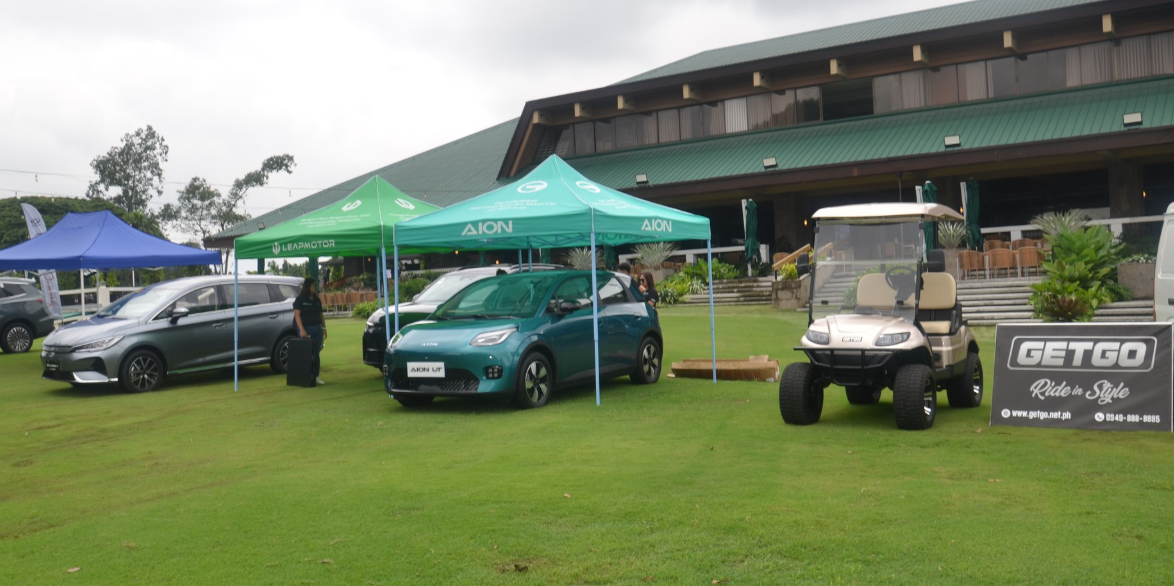
The Philippines remains on track to more sustainable mobility as the public and private sectors gear up to collaborate further and push for massive local adoption of electric vehicles (EVs).
“After lobbying for the legislations and national policies that initiate and propel the growth of the local EV sector, EVAP (Electric Vehicle Association of the Philippines) recognizes the fact that we remain in a more crucial time,” said EVAP President Edmund Araga.
“EVs require sufficient and reliable charging infrastructure nationwide. At the same time, we should also get to the forefront of the development of more efficient and accessible battery technologies. Hence, we are supporting national efforts to establish more partnerships with the private sector and potential investors,” he added.
Araga emphasized that the country’s EV sector is keeping the ignition on to further help in nation building through the major investments coming in—creating more jobs, contributing to economic outputs, promoting a cleaner environment, and improving efficiencies in terms of mobility as petrol prices remain volatile.
CONTINUED GROWTH
Through the Electric Vehicle Development Act (EVIDA) that was enacted in 2022, the growth of the EV sector continues, and more investments come in from PH-based and international private companies.
Earlier this month, the Board of Investments (BoI) announced a new exploration from a new Chinese delegation for the possibility of establishing new local facilities manufacturing EVs and renewable energy equipment. The investment promotion agency is yet to share more details about this deal but has the assurance that it is likely to push through.
At the same time, the Department of Energy (DOE) has hinted about receiving expressions of interest from still undisclosed private investors that aim to roll out a combined 4,000 EV charging stations (EVCS) nationwide in two to three years.
In June, Mitsubishi Motors Philippines Corp announced its intention to infuse an additional ₱7 billion to the country in the next five years. The company said that this time, it will be heeding the government’s push for EVs and renewable energy. During the same month (June), the Department of Trade and Industry lobbied the new Electric Vehicle Incentive Strategy (EVIS), which when approved could generate up to ₱11.4 trillion in economic outputs and possibly create nearly 700,000 local jobs in EV assembly, battery production, EVCS installation, and maintenance services.
Even the Asian Development Bank has agreed to infuse $100 million (about ₱5.841 billion) into the local EV sector through a financing arrangement with the Ayala Corporation, which operates ACMobility, one of the current biggest distributors of EVs locally. In January, the partners announced that the funding is allocated for the procurement of EV charging stations and of more units for commercial distribution.
And lastly, Australia’s StB GIGA Factory in September 2024 opened the first EV battery facility in the country, located in New Clark City. The manufacturing plant is now running to annually produce 2 gigawatt-hours of batteries by 2030—enough to power up to 18,000 EVs with a still significant portion eyed for possible export. It has since been helping attract more investments into the country for the renewable energy and EV sectors.
These investments, on top of other similar deals and initiatives in the EV sector, are also aligned with the Comprehensive Roadmap for the Electric Vehicle Industry (CREVI) that is aimed at bolstering the EV adoption nationwide through deploying up to 7,300 EV charging stations (EVCS) by 2028. The target is to deploy over 20,400 EVCS by 2040 to service a projected 2.5 million EVs running on local roads by that time.
EVAP PHOTO