

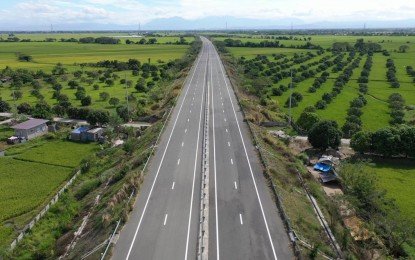
Japan has committed to sustain its support for the Philippine government’s infrastructure development agenda, assuring financing assistance for big-ticket bridge, spillway, and maritime projects designed to improve connectivity and enhance safety.
Japan is the country’s largest official development assistance provider (ODA), with commitments amounting to approximately P805.76 billion, or 39.15 percent of the total ODA portfolio as of March 2025.
In a statement on Sept. 12, 2025, the Department of Finance (DOF) said the Philippine economic and infrastructure team, led by Finance Secretary Ralph Recto, met with the Japanese government in Osaka, Japan on Sept. 11 to discuss the progress of key projects supported by Japan.
The government of Japan was represented by Dr. Mori Masafumi, Special Advisor to the Prime Minister of Japan, as well as officials of the Ministry of Foreign Affairs; the Cabinet Secretariat; the Ministry of Finance; the Ministry of Economy, Trade and Industry; the Ministry of Internal Affairs and Communications; the Ministry of Land, Infrastructure, Transport and Tourism; the Japan International Cooperation Agency; and the Japan Bank for International Cooperation.
Part of the Philippine delegation were Philippine Ambassador to Japan Mylene Garcia-Albano, Economy, Planning, and Development Secretary Arsenio Balisacan, Transportation acting Secretary Giovanni Lopez, Department of Public Works and Highways Senior Undersecretary Emil Sadain, and Department of Budget and Management Assistant Secretary Romeo Matthew Balanquit.
The high-level meeting was held on the sidelines of the 2025 Osaka Expo and the Philippine Economic Briefing.
“Today’s discussions confirmed steady progress in cooperation across various fields, including large-scale infrastructure development, disaster prevention, information and communications, energy, and the Mindanao peace process,” Masafumi said.
Among the big-ticket projects in the pipeline for Japanese financing for 2025 to 2026 is the 2.611-km. second San Juanico bridge construction project, which will connect Leyte and the Samar Islands via the municipalities of Babatngon and Sta. Rita.
This will cut travel time, reduce transport costs, and open new economic opportunities for local businesses and workers in the Visayas region.
Other projects include the Parañaque spillway construction project, designed to protect families in the Laguna Lakeshore areas by reducing flood inundation by up to 37 percent during extreme weather events.
The project will channel excess lake water from Laguna Lake into Manila Bay through Muntinlupa, Parañaque, Las Piñas, and Bacoor via an underground drainage system, safeguarding homes, livelihoods, and communities.
Japan will also fund the Philippine Coast Guard (PCG) support facility development project in the Subic Bay Area, which aims to enhance the PCG’s operational capacity to strengthen maritime safety, ensuring safer seas for Filipino fisherfolk, travelers, and local communities.
“Your (Japanese government) confidence will be invested properly in the future of our people. Every yen and every peso will be made to work harder and go farther. We will meet your trust with transparency, predictability, and delivery,” Recto said.
During the meeting, both sides also discussed project status updates, implementation challenges, and corresponding resolutions and next steps for ongoing projects funded by Japan.
These include the North-South Commuter Railway Project, the Metro Rail Transit Line 3 Rehabilitation Project, and the Metro Manila Priority Bridges Seismic Improvement Project.
Updates on Japan’s significant contributions to the reconstruction in Mindanao were also tackled, with discussions centering on the country’s progress on the peace process and the Japanese government’s contributions to Mindanao.
DPWH PHOTO