

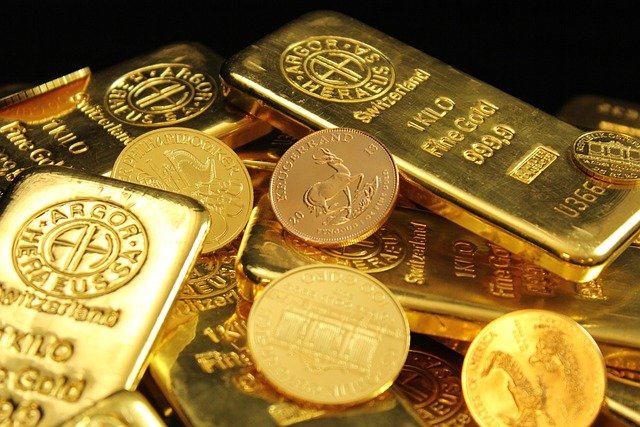
Supported by economic data pointing to additional interest rate cuts by the US Federal Reserve in the world’s largest economy, gold prices exceeded $4,400 per ounce for the first time on Monday.
Starting the day on a positive footing, gold climbed to a record high of $4,420.3 per ounce. As a result, amid rising global uncertainty, gold prices have set a new record 51 times so far this year.
The price of gold began the year at $2,620 per ounce.
Since the beginning of the year, the price of gold per ounce has risen by 68 percent, or more than $1,800.
Analysts recalled that the Fed, which cut interest rates last week, has an inflation target of 2 percent and a dual mandate of price stability and full employment. They also pointed out that recent US labor market data indicate a cooling in employment conditions.
In the US, annual inflation stood at 2.7 percent in November, coming in below expectations.
Analysts further noted that tensions escalated after the US government imposed an embargo on Venezuelan tankers, adding that gold prices regained momentum due to the impact of such geopolitical risks.
They also emphasized that the partial weakening of the dollar index, along with continued central bank purchases, has supported the upward movement in gold prices.
Meanwhile, silver prices have also been rising in tandem with gold. Silver, which climbed to $69.45 per ounce in the spot market, has surged by 135 percent since the start of the year, outperforming gold’s 68 percent increase.
Gold generally benefits from interest rate cuts. In a high-interest-rate environment, gold tends to be less attractive compared with other investments such as government bonds. When interest rates decline, gold becomes more appealing to investors.
However, the traditionally negative correlation between bond yields and gold prices has weakened significantly over the past three years. This development is attributed to growing investor distrust of government bonds in industrialized countries such as the US, Japan, and the UK, driven by rising debt levels.
It is also notable that confidence in the dollar has declined amid repeated pressure by US President Donald Trump on the Fed to maintain low interest rates in order to finance the country’s large budget deficit.
As a result of declining confidence in the dollar and concerns over US financial stability, many investors have increased their exposure to gold and silver this year as part of a broader portfolio restructuring.
PIXABAY PHOTO