

Weak foreign direct investment (FDI) inflows have put renewed pressure on the Philippines to clean up governance and push through long-promised reforms, as economists warn that investor confidence will not recover without decisive action.
An economist said stronger governance and reform measures could help reverse the slowdown in FDI this year, following disappointing figures released by the Bangko Sentral ng Pilipinas (BSP).
The BSP reported on Tuesday that net FDI inflows slid to $897 million in November 2025, slightly below the $901 million posted in the same month in 2024—underscoring the persistent softness in investor appetite.
Most of the inflows originated from South Korea and were funneled mainly into the manufacturing sector.
For the first 11 months of 2025, net FDI plunged to $7.1 billion, sharply lower than the $9.1 billion recorded in the same period a year earlier, highlighting the scale of the slowdown.
Japan, the United States, Singapore, and South Korea remained the country’s biggest investment sources, with funds largely directed to manufacturing, wholesale and retail trade, and real estate.
Rizal Commercial Banking Corporation chief economist Michael Ricafort said the decline was partly driven by uncertainty surrounding US trade policies, as well as investor hesitation amid heightened domestic political noise toward the end of last year.
“For the coming months, improved governance standards and reforms would help improve international investor confidence and sentiment, including for FDIs,” he said.
Ricafort added that possible interest rate cuts by both the US Federal Reserve and the BSP could help revive investment by reducing borrowing costs, alongside other stimulus measures such as monetary easing and fiscal expansion—provided policymakers still have room to maneuver.
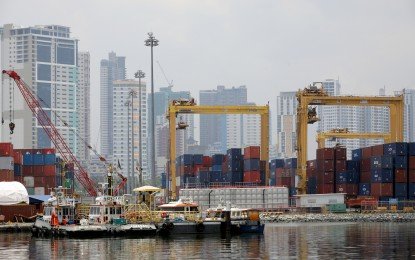
PNA PHOTO