

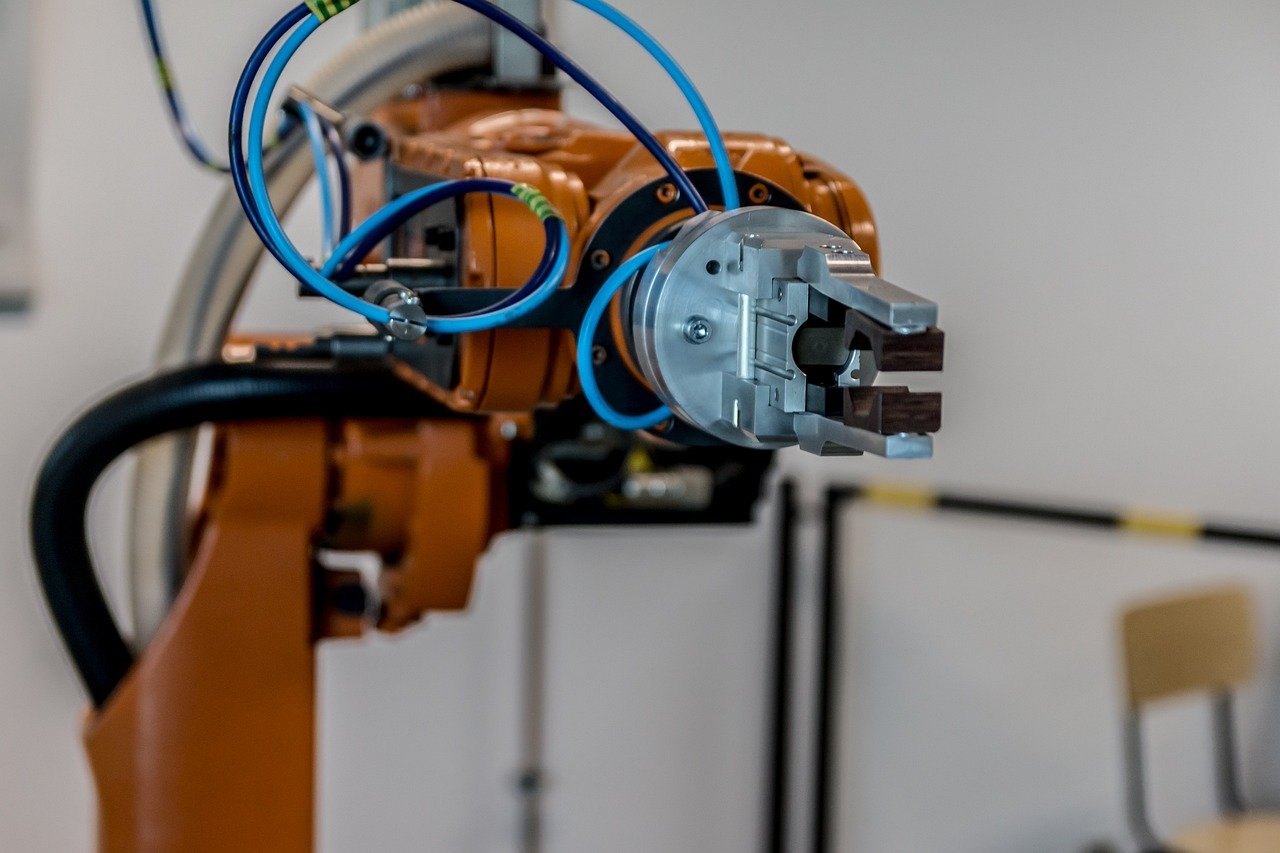
The Department of Science and Technology (DOST) on Monday forcefully pushed businesses—especially micro, small, and medium enterprises (MSMEs)—to stop lagging behind and immediately adopt robotics and automation if they want to scale up, expand operations, and create more jobs.
In a Bagong Pilipinas Ngayon interview, DOST Balik Scientist Albert Causo made it clear that the government-funded Connected and Unified Autonomous Technologies with Automation and Robotics (CUATRO) Program is not optional window dressing but a direct intervention to drive companies toward robotics, artificial intelligence (AI), and Industry 4.0 technologies to dramatically boost productivity.
“Our idea is that these modern technologies, when adopted by our businesses, will help them grow their operations, improve capacity, and produce more with the same amount of input. Hopefully, this will enhance economic activity, and from there, the livelihoods of our people will improve,” he said.
Causo directly challenged the widespread fear-mongering that robots and automation automatically eliminate jobs, stressing that these technologies fundamentally reshape work rather than erase workers.
“Let’s not be worried about robots and AI, because first of all, those technologies were really created to support human needs. So, it was really invented for that purpose. Secondly, we need to accept the fact that, yes, there will be job losses, but no loss of people,” he said.
Causo explained that under the CUATRO Program, DOST teams actively go on-site to pinpoint which business processes should be automated first—specifically those that are repetitive, dangerous, or highly prone to error.
This no-nonsense, targeted strategy allows businesses to modernize without bleeding money, dismantling the excuse that automation is always too expensive.
Causo pointed out that companies already dominating robotics and automation are those in advanced manufacturing, including semiconductors, automobiles, auto components, and other high-value products—industries that refuse to stay stuck in outdated systems.
He emphasized that even small and medium enterprises can no longer afford to delay the adoption of modern technologies like robots.
Concerns over steep investment costs, he said, are directly addressed by helping firms calculate their return on investment and by linking them to financing under the DOST’s Small Enterprise Technology Upgrading Program (SETUP), which offers zero-interest loans with flexible payment terms.
He also cited DOST-assisted local food manufacturers that didn’t just increase output but doubled their workforce after automation improved quality and slashed costs—driving demand upward.
By aggressively promoting robotics as a driver of inclusive growth, Causo said DOST is pushing MSMEs to modernize now, stay competitive, and generate more jobs as the country barrels toward advanced manufacturing.
PIXABAY PHOTO