

The Asia-Pacific data center market is undergoing a fundamental shift, moving rapidly toward high-density, liquid-cooled facilities to support surging artificial intelligence (AI) workloads.
While the region remains highly attractive for investment due to globally competitive construction costs in some markets, sector experts are warning that the demand for advanced AI-ready infrastructure is outstripping the capacity of local supply chains and power grids.
This transition is accelerating in the Asia-Pacific market, with AI workloads projected to drive a staggering 165 percent increase in power usage by 2030.
“Data centers are increasingly at the forefront of many governments’ long-term policy ambitions and their significance is better understood and recognized – providing greater opportunities for clients in the sector. Yet our report highlights key challenges that must be addressed to avoid putting a brake on investment and the benefits of AI transformation,” said Sumit Mukherjee, Managing Director for Real Estate in Asia at Turner & Townsend.
“Power availability remains a critical barrier, with long-lead times for grid connection the main constraint. There is also stronger competition than ever before for power due to both increased business and consumer demand placing added pressure on grids,” he added.
The 2025 Data center construction cost index, from global professional services company Turner & Townsend, analyses the current cost per watt to build data centers in 52 markets worldwide displays a stark contrast in the Asia-Pacific construction costs.
While mature hubs dominate the most expensive tier globally, the region’s competitiveness is also anchored by its lower-cost emerging markets. The two most expensive cities are led by Tokyo at $15.15 per watt (globally ranked 1st), followed closely by Singapore at $14.53 per watt (globally ranked 2nd), conversely, one of the lowest-cost construction environments are exemplified by Mumbai, India, with a cost-per-watt of just $6.64 per watt, ranking as the 2nd lowest-cost region globally (51st out of 52 markets).
The primary barrier to delivering next-generation AI data centers on time is not construction cost inflation, but power and supply chain readiness.
Supply Chain Preparedness: A significant 83 percent of data centre industry experts surveyed in the report do not believe local supply chains are well-equipped to deliver the advanced cooling technology required for high-density AI data centers. This readiness is rated as only moderately prepared in Asia, with bottlenecks expected as adoption of solutions like direct-to-chip liquid cooling scales.
High-Density Costs: While construction costs for traditional data centres are experiencing a global average inflation of 5.5 percent (Analysis of the current cost per watt to build data centers in 52 markets worldwide) in 2025, the more technically complex AI-supporting facilities come at a premium of an estimated 7–10 percent.
Power Availability: Nearly half (48 percent) of respondents globally stated that power availability is the most prominent obstacle to delivering projects on schedule. The ever-increasing power-density of AI data centers only makes this.
The report advises clients to review their procurement models to help strengthen the supply chains and support the delivery of urgently-needed AI data centres. Innovation will also be required to develop and deliver more energy efficient designs, and mitigate the risks of power connection delays.
Other well-established markets across the globe, particularly in the United States and Europe, make up most of the top 15. This includes Silicon Valley ($13.3 per watt), London ($12.0 per watt) and Frankfurt ($11.6 per watt) – each among the largest markets in their respective regions.
“Developers and operators must adapt quickly to the evolving market landscape. AI data centers are more advanced, larger, and by extension, costlier. They come with greater power demands and modern cooling solutions. Clients need to navigate the power conundrum with greater openness to off-grid design solutions, while also securing reliable supply chains capable of providing the technology and talent needed for this new wave of data centers,” Mukherjee said.
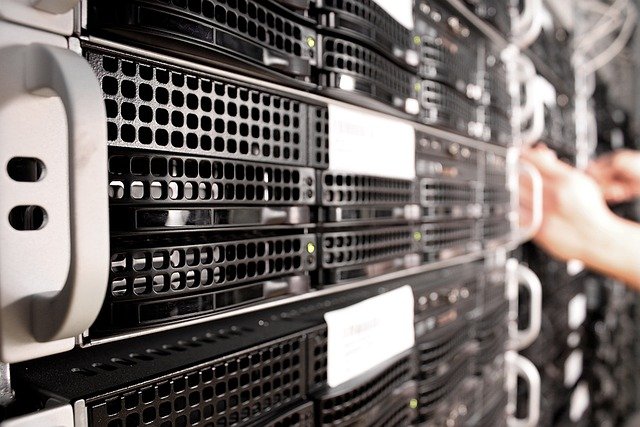
PIXABAY PHOTO