

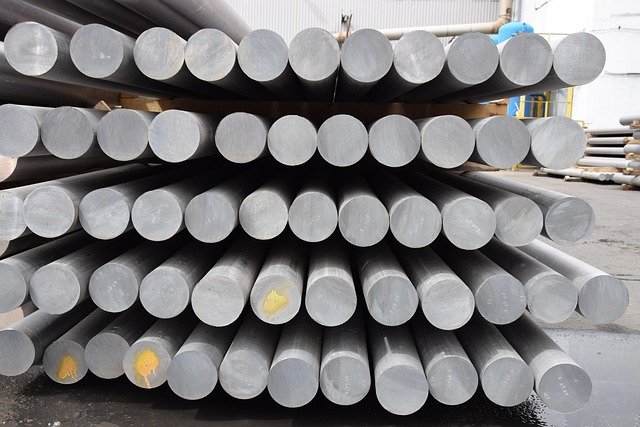
Aluminum hit its highest level since April 2022, reaching $3,225 per ton on the London Metal Exchange (LME), as base metals opened the year strong on expectations of US interest rate cuts, steady Chinese demand, and concerns over tariffs and supply.
Prices were supported by production disruptions, lower output targets, and limited supply growth, with copper leading gains across the base metals complex. Aluminum later stabilized at $3,186 per ton, up 6.4 percent in the first 15 days of 2026 from its end-2025 level of $2,995.5.
Widely used in construction, automotive, and packaging, aluminum is also benefiting from the green energy transition, including demand from solar panels, wind turbines, electric vehicles, and batteries. Rising investment in artificial intelligence, data centers, energy grids, and electronics has further boosted prices.
Beijing is expected to support the economy by curbing metals production capacity to ease deflationary pressures, a move analysts say could further lift aluminum prices.
Zafer Ergezen, a futures and commodity markets analyst, said the year began with rising expectations of interest rate cuts, which intensified as Jerome Powell is set to be replaced by a new Federal Reserve chair appointed by US President Donald Trump.
“Aluminum becomes one of the most sought-after commodities when growth and recovery in China are expected due to its widespread use in many areas, including the auto industry and home appliances — the demand is expected to rise on this side,” Ergezen told Anadolu.
He added that China is expected to continue domestic incentives, supporting stronger internal demand.
“Global markets expect a recovery, especially in the second half of the year, which is expected to boost demand,” he said. “We see companies gradually bracing for this in advance with rising purchases and volumes in forward transactions, and we may see a rise in deliveries, too.”
Ergezen noted that China and Russia are among the world’s top aluminum producers, while tariff concerns and a weaker US dollar have added to price pressures.
“The US is the top aluminum consumer, followed by Japan, so we can say the expectation of a recovery is taking effect,” he said.
“Rate cuts, inflation concerns, recovery expectations, the impact of tariffs, a falling US Dollar Index, China’s incentives, sanctions on Russia, and supply concerns pushed up aluminum prices,” he added.