

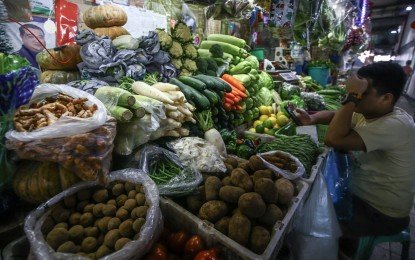
Philippine monetary authorities are closely monitoring domestic price movements as inflation is projected to peak at 3.6 percent this year, largely driven by supply-side pressures.
In an interview with CNBC Asia on Friday, Eli Remolona Jr., governor of the Bangko Sentral ng Pilipinas (BSP), said the anticipated peak inflation rate for the year would be higher than last year’s level but still comfortably within the government’s 2 percent to 4 percent target range.
He explained that headline inflation “is going to go up, but these are mostly because of supply side factors.”
Remolona emphasized that underlying price pressures remain contained. “The core inflation number is actually going to go down. So that’s what I mean when I say we’re in good shape. But at the same time, we have to closely watch inflation because supply side increases in inflation can spread. There are spillover effects when they’re big enough, but for now, they’re not big enough to spread,” he added.
In January, inflation accelerated to 2 percent from 1.8 percent the previous month, driven by faster increases in housing, water, electricity, gas and other fuels. The uptick marked the first return to the government’s target band since inflation fell to 1.8 percent in March of last year.
With inflation expected to remain within target, the BSP’s policy-setting Monetary Board reduced the central bank’s key interest rates by another 25 basis points on Thursday. This brought total rate cuts to 225 basis points since August 2024, underscoring the central bank’s shift toward supporting growth.
According to Remolona, the latest rate reduction is intended to help rebuild confidence in the domestic economy, particularly after softer output in the second half of last year, partly linked to disruptions caused by flood control issues.
Economic growth, measured by gross domestic product (GDP), slowed to 3.9 percent in the third quarter from 5.5 percent in the previous quarter. Expansion weakened further to 3 percent in the fourth quarter, resulting in full-year growth of 4.4 percent—down from 5.7 percent in 2024.
The BSP chief underscored the interplay between sentiment and economic performance, saying “growth and confidence are a two-way street.”
“Growth affects confidence and confidence affects growth. Maybe we could do something on the growth side. In the meantime, confidence also depends on resolving governance issues that we’ve been facing. But if we can do something on the growth side, maybe we could restore some of the confidence and then help generate more growth down the road,” he said.
Remolona also revealed that the central bank has developed a sentiment-tracking tool to monitor shifts in public and market outlook.
“For now, the index is down. But it’s beginning to show signs of recovery that we call green shoots. So, I think that the cut in policy rates is an effort to water those green shoots,” he added.
PNA PHOTO