

President Ferdinand R. Marcos Jr. on Monday underscored the non-negotiable need for clear rules and shared accountability between the government and the private sector as he presided over the turnover of the Caliraya–Botocan–Kalayaan (CBK) Hydroelectric Power Plants to a private consortium.
Marcos stressed that public-private partnerships are critical mechanisms, not mere policy choices, to guarantee that essential services such as electricity remain reliable, affordable, and firmly aligned with public interest.
“Building on the strength of both the public and private sectors, we encourage collaborations that safeguard the public interest while promoting transparency and accountability,” Marcos said in his speech.
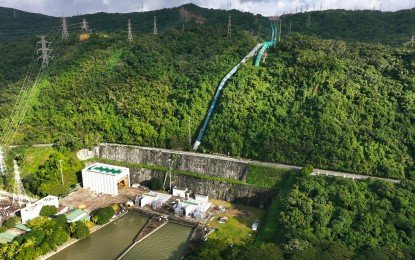
The CBK complex stands as one of the largest hydropower facilities in Luzon, delivering a combined 797 megawatts of electricity and playing a decisive role in the country’s power supply.
The complex consists of three plants with clearly defined functions: Caliraya serves as the water storage facility, Botocan generates power from flowing river water, and Kalayaan stabilizes electricity supply and demand—particularly during peak consumption hours.
Marcos emphasized that the CBK system is indispensable to the stability of the Luzon power grid, especially as the country accelerates its transition toward renewable energy sources.
“Together, they form a system designed not just to generate power, but to balance the supply and demand across the entire power system,” he said.
The President pointed out that the government generated more than P36.27 billion from the privatization of the CBK facilities—a substantial sum that can now be redirected to urgent public needs.
“The government is able to unlock significant resources while ensuring the continued operation of a strategically important energy asset,” Marcos said, adding that the funds could be used to build classrooms, roads, and hospitals.
The new operator, the Thunder Consortium, is composed of Aboitiz Renewables Inc., Sumitomo Corporation, and Electric Power Development Co., Ltd. (J-POWER)—companies with proven track records in operating power facilities both locally and internationally.
Marcos said the successful turnover sends a strong signal of investor confidence in the country’s energy policies and the government’s public-private partnership framework.
“Strategic public-private collaboration transforms investment in essential infrastructure into reliable everyday services that people can trust,” he said.
Privatization gains
Department of Energy (DOE) Secretary Sharon Garin said the privatization of CBK is clearly mandated under Republic Act No. 9136, or the Electric Power Industry Reform Act (EPIRA).
She emphasized that CBK provides critical capacity, particularly during the dry season when electricity demand typically surges, noting that this facility plays a key role “because this is what we need to regulate the reserve.”
“This is the only pump storage in the country,” she said in an interview after the ceremony.
Garin also moved to shut down concerns that privatization would drive up electricity prices, stressing that “energy is a very regulated industry.”
“They need to apply to the ERC (Energy Regulatory Commission) for their prices, and the ERC need to approve it so it cannot be abused,” she said.
ABOITIZ PHOTO