

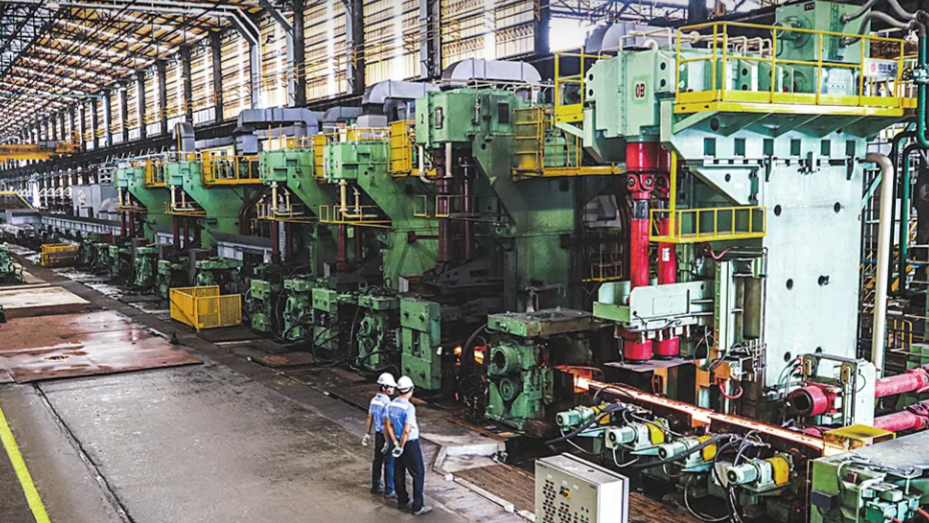
An industry group official on Thursday expressed readiness to work closely with the government, citing the industry sector’s weaker contribution to the domestic economy in 2025.
While services recorded the fastest growth, Federation of Philippine Industries (FPI) chair Beth Lee said this was not enough to sustain overall expansion. She stressed the need to revitalize industry, particularly manufacturing, which grew by only 2.5 percent last year, driven mainly by consumer goods and automotive demand.
Lee said the contraction “reveals structural weaknesses in construction, mining, and utilities” that are vital for jobs, infrastructure, and energy stability. She added that “the numbers underscore the urgent need to strengthen the country’s industrial base to secure resilience and competitiveness.”
“Without a strong industrial backbone, the economy risks overdependence on services, which cannot fully absorb employment demand or provide the production base for global competitiveness. Revitalizing Industry means making our factories, construction sites, and energy systems resilient to shocks and capable of delivering inclusive growth nationwide,” she said.
Lee said FPI is committed to working with the government and stakeholders “to rebuild and fortify the country’s industrial base as the Philippines hosts ASEAN 2026.”
Data from the Philippine Statistics Authority (PSA) showed the industry sector grew by 1.5 percent last year, sharply lower than the 5.6 percent growth in 2024. In the fourth quarter, the sector contracted by 0.9 percent, reversing the previous quarter’s 0.7 percent expansion, due to lower government and private infrastructure spending amid corruption issues in several flood control projects.
The industry sector posted the lowest contribution to economic output in 2025, compared with 5.9 percent for services and 3.1 percent for agriculture, forestry, and fishing.
REFORM MEASURES
The domestic economy grew by 4.4 percent in 2025, below the government’s revised 4.8- to 5-percent target, due to weather disturbances, flood control issues, and global uncertainties. Fourth-quarter growth slowed to 3 percent from 3.9 percent in the previous quarter and 5.3 percent a year earlier.
Despite this, Rizal Commercial Banking Corporation chief economist Michael Ricafort projected full-year growth of 5.3 to 5.8 percent, citing catch-up spending and reforms expected to “improve investor confidence/sentiment and help boost economic/GDP (gross domestic product) growth, since government spending would be a major driver of overall economic growth.”
He added that stronger anti-corruption measures and governance reforms could be the “missing and remaining important catalyst” to attract more investments, create jobs, and support gains in local financial markets.
STEELASIA PHOTO