

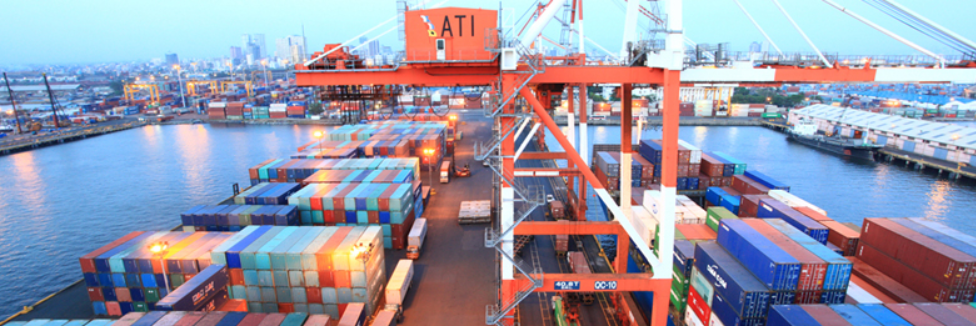
The government-owned Maharlika Investment Corporation (MIC) plans to acquire up to an 11.2-percent stake in listed Asian Terminals Inc. (ATI) to help ensure stable cash flows and advance its mandate to invest in strategic real-economy assets.
The acquisition will be undertaken through a combination of a direct share purchase and a tender offer to existing public shareholders. The tender offer will support ATI’s planned voluntary delisting from the Philippine Stock Exchange (PSE), MIC said in a statement Tuesday.
MIC president and chief executive officer Rafael Consing said the port sector plays a vital role in the Philippine economy, describing it as “the circulatory system” that supports trade and economic activity. Drawing from his experience in the global logistics industry, Consing previously served as senior vice president and chief financial officer of International Container Terminal Services Inc. (ICTSI).
“By securing our position in this utility, we are enhancing our sovereign capability to generate sustainable wealth, which is inextricably linked to the nation’s long-term economic security,” Consing said.
He said this background reinforced his view that port infrastructure should be regarded not only as a commercial enterprise but as a strategic national asset. “We are deploying the Fund to capture value from critical utilities that have high barriers to entry and a direct correlation to the country’s gross domestic product growth. This ensures that our portfolio is resilient, cash-generative, and aligned with national progress,” Consing said.
He added that securing a stake in ATI would strengthen the country’s capacity to generate sustainable wealth, which he said is closely tied to long-term economic security.
In a press release, MIC said acquiring a minority stake in ATI would ensure that the Philippine government maintains a permanent economic interest in infrastructure that underpins the national supply chain. The fund described the move as an approach of “sovereign stewardship,” ensuring that even as the asset remains under private ownership, the State retains a passive stake to benefit from the economic returns generated by Philippine trade flows.
ATI WEBSITE PHOTO