

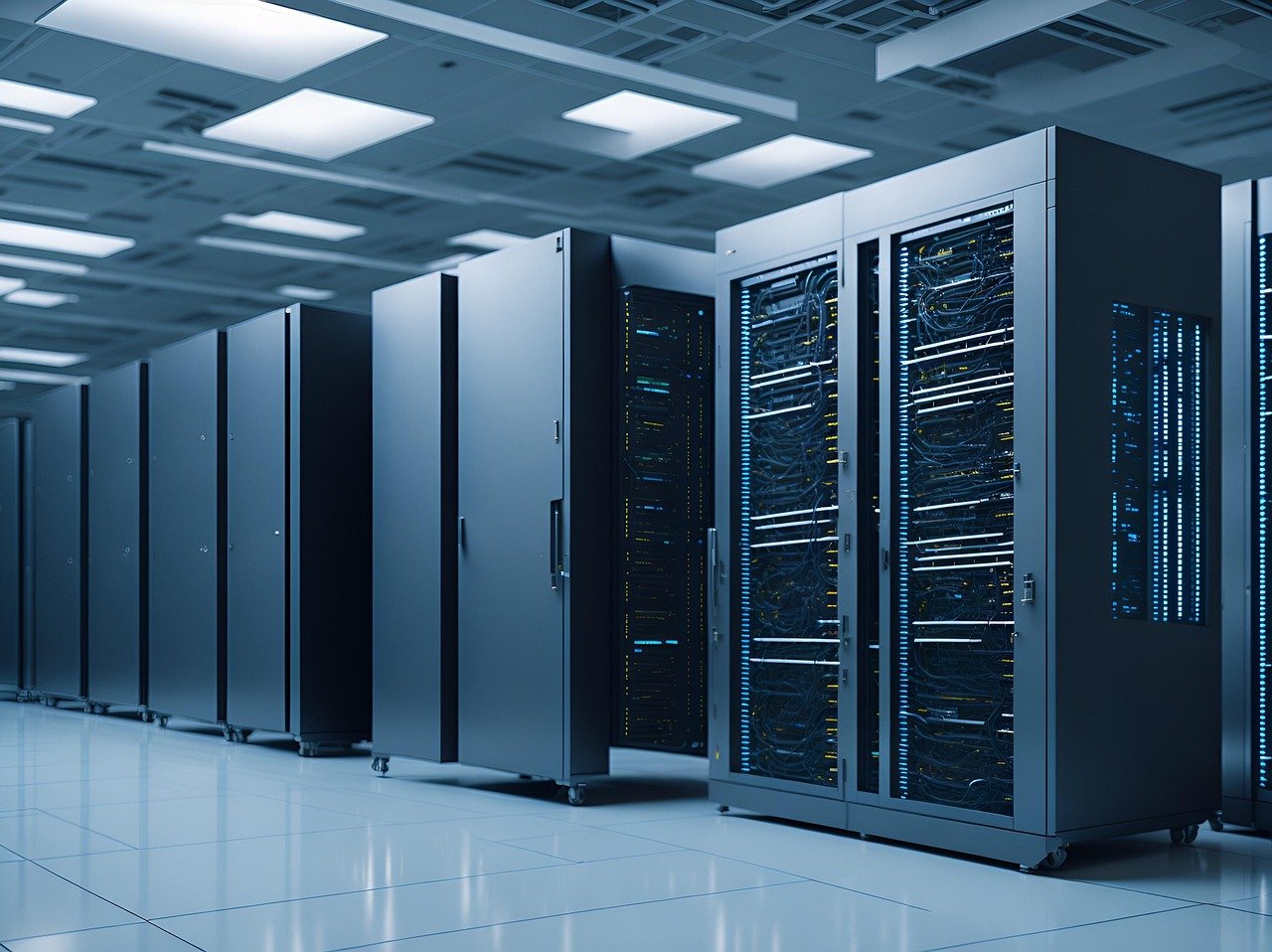
There are fears of an AI bubble as artificial intelligence (AI) tools like ChatGPT and Google Gemini become indispensable in government and market operations globally, requiring the building of more data centers.
Gloria Shkurti Ozdemir, an AI researcher and faculty member at Azerbaijan’s Hazar University in Tukiye, said that governments and academia first led AI research and development (R&D) efforts, but the private sector now plays a bigger role.
Ozdemir said that AI’s growing military and geopolitical importance has created a self-sustaining cycle of technology that gets governments and businesses involved.
“Companies are competing for commercial and technological superiority, while countries are prompted to fund and adopt these technologies to keep up in competition and security, triggering new waves of R&D with public funding,” she said.
She said previously, projects in the tech industry where expectations exceeded reality showed that bubbles can burst. One good example is the metaverse, where interest has now faced.
“Interest quickly faded, but the concepts and goals did not disappear entirely; they were only postponed,” Ozdemir said.
However, should the AI bubble burst, she said that there will likely be a temporary slowdown rather than a complete halt.
“Even if the AI bubble bursts, economic competition, geopolitical imperatives, and the foundational role of AI will prevent the development and funding of it from stopping entirely,” she added.
For his part, Agah Tugrul Korucu, an AI expert and an associate professor of information technology (IT), said that sustainability issues also fuel AI bubble discussions. This has caused the industry to build smaller but specialized models to reduce costs and energy requirements.
“With AI, we’re seeing a rise in labor productivity—an industrial project analysis that would otherwise take an expert eight hours may be done in minutes by AI, which gives experts time to use for more creative or strategic tasks instead of routine work,” he said.
“AI-powered systems in robotic production lines can monitor micron-level errors, which in turn improve quality and reduce costs,” Korucu added.
PIXABAY PHOTO